

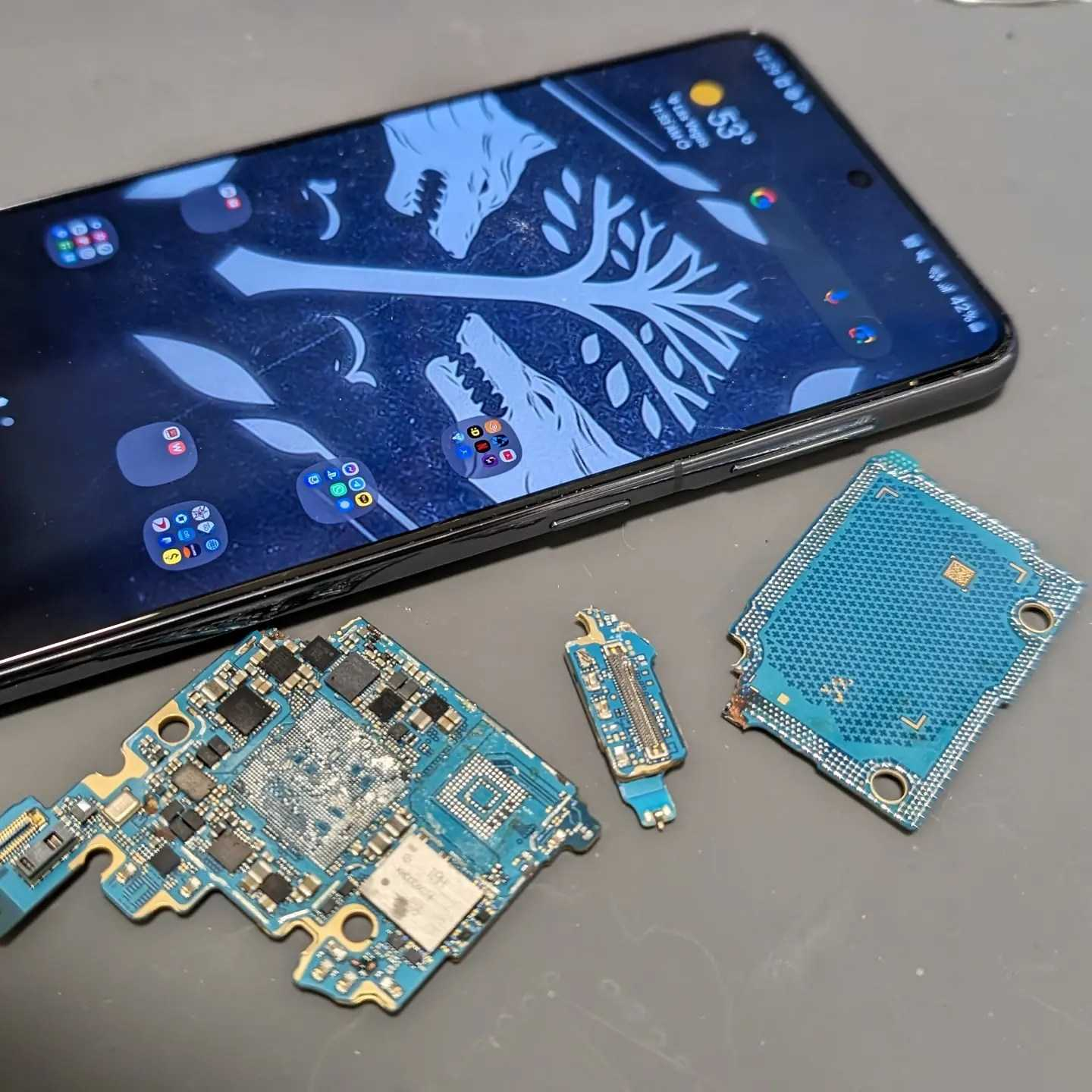
Ever wondered what happens when a smartphone takes a severe beating? Well, here's a fascinating tale from the trenches of data recovery!
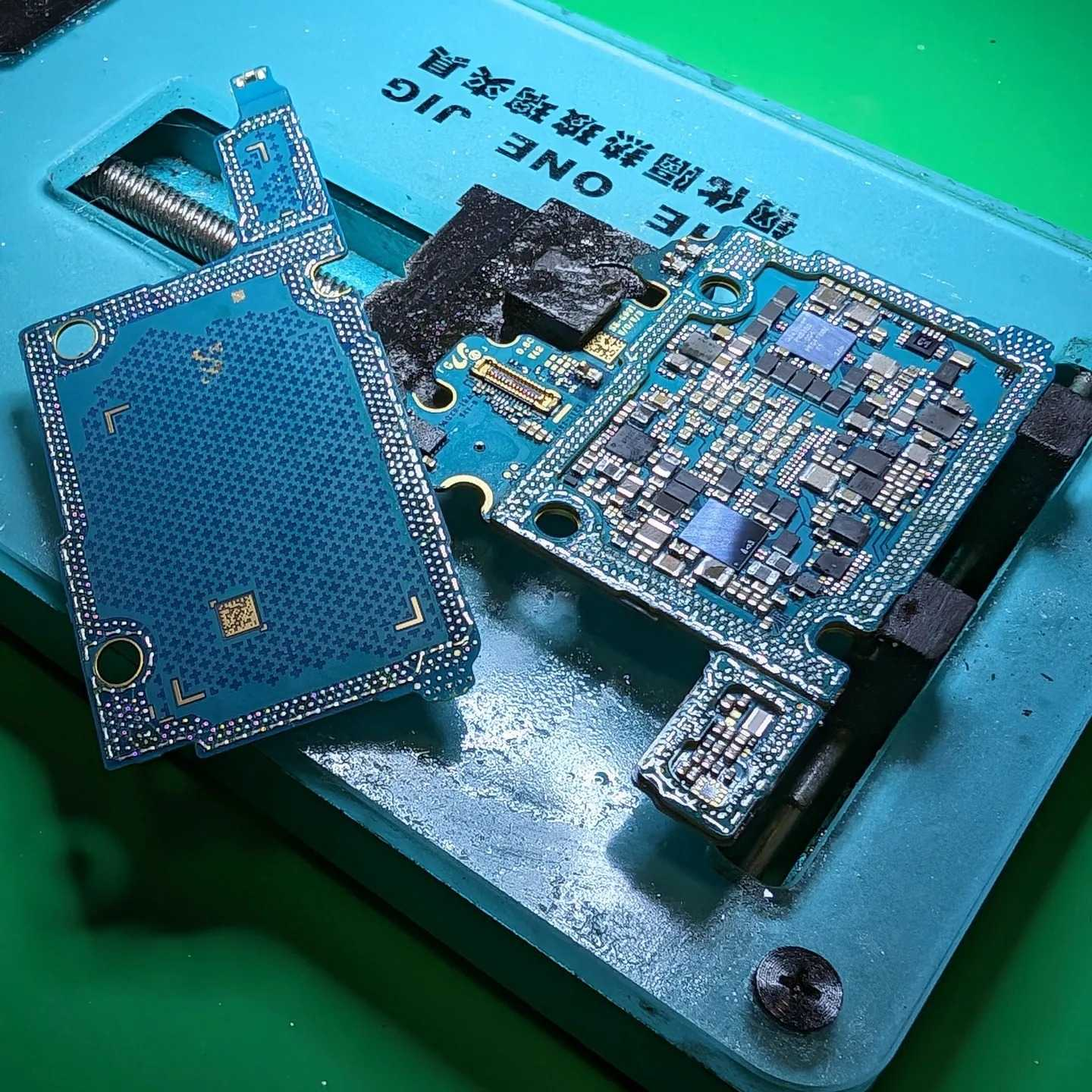
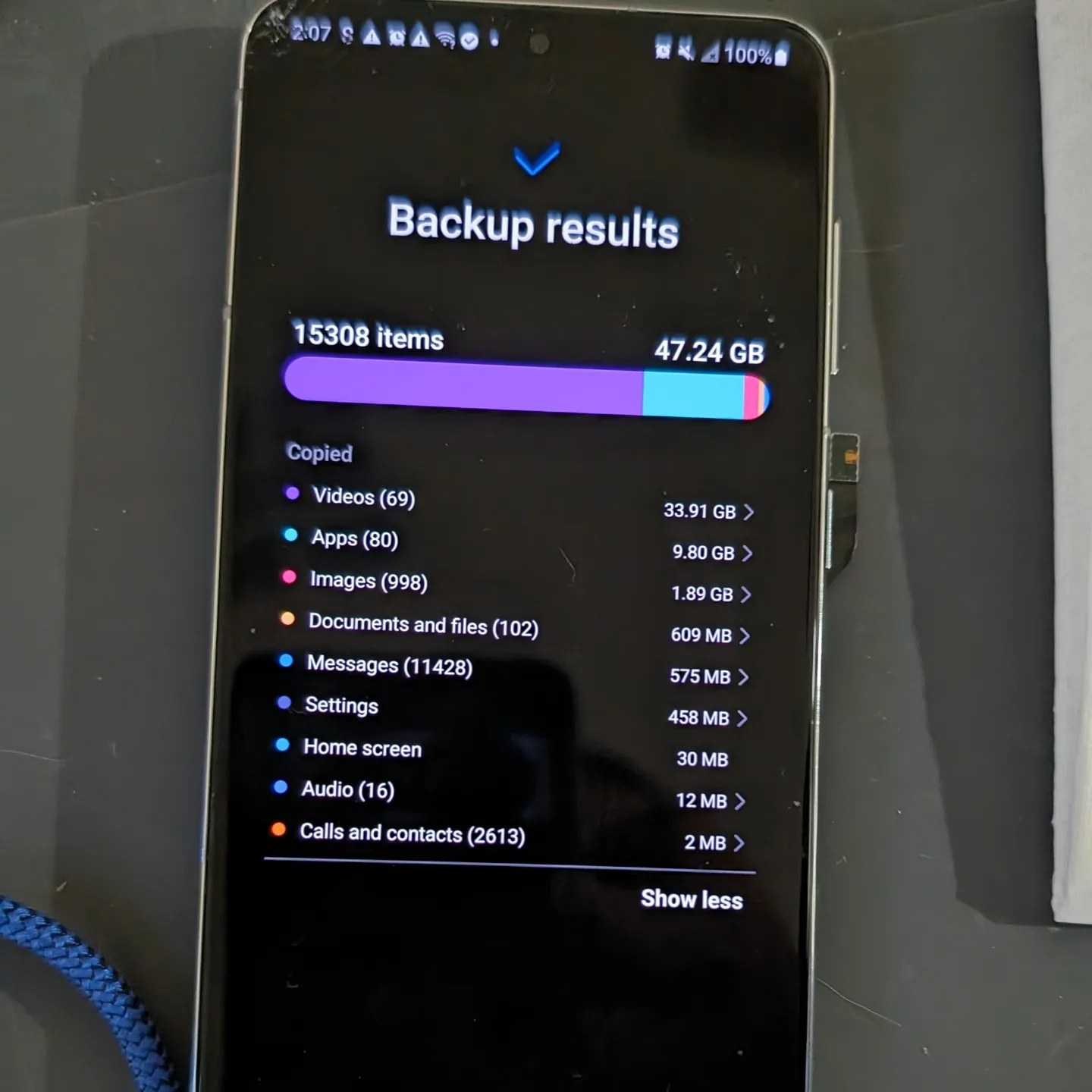
This Samsung Galaxy S21 came to us in a sorry state – smashed in half, with a part of the motherboard in shambles. For newer smartphones, unlocking and accessing data require booting up the device. But with a broken motherboard, that pathway becomes an encrypted dead end, unless...
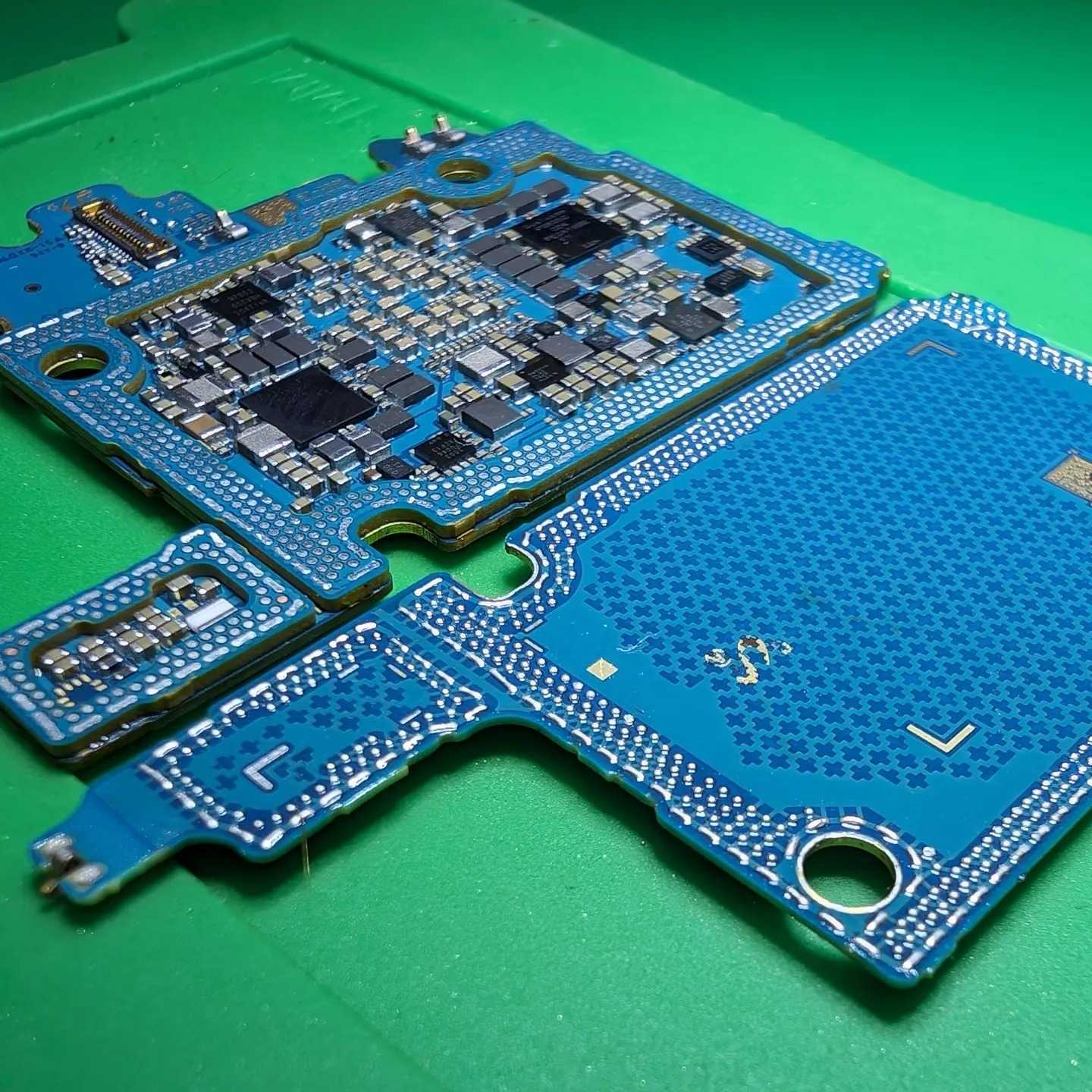
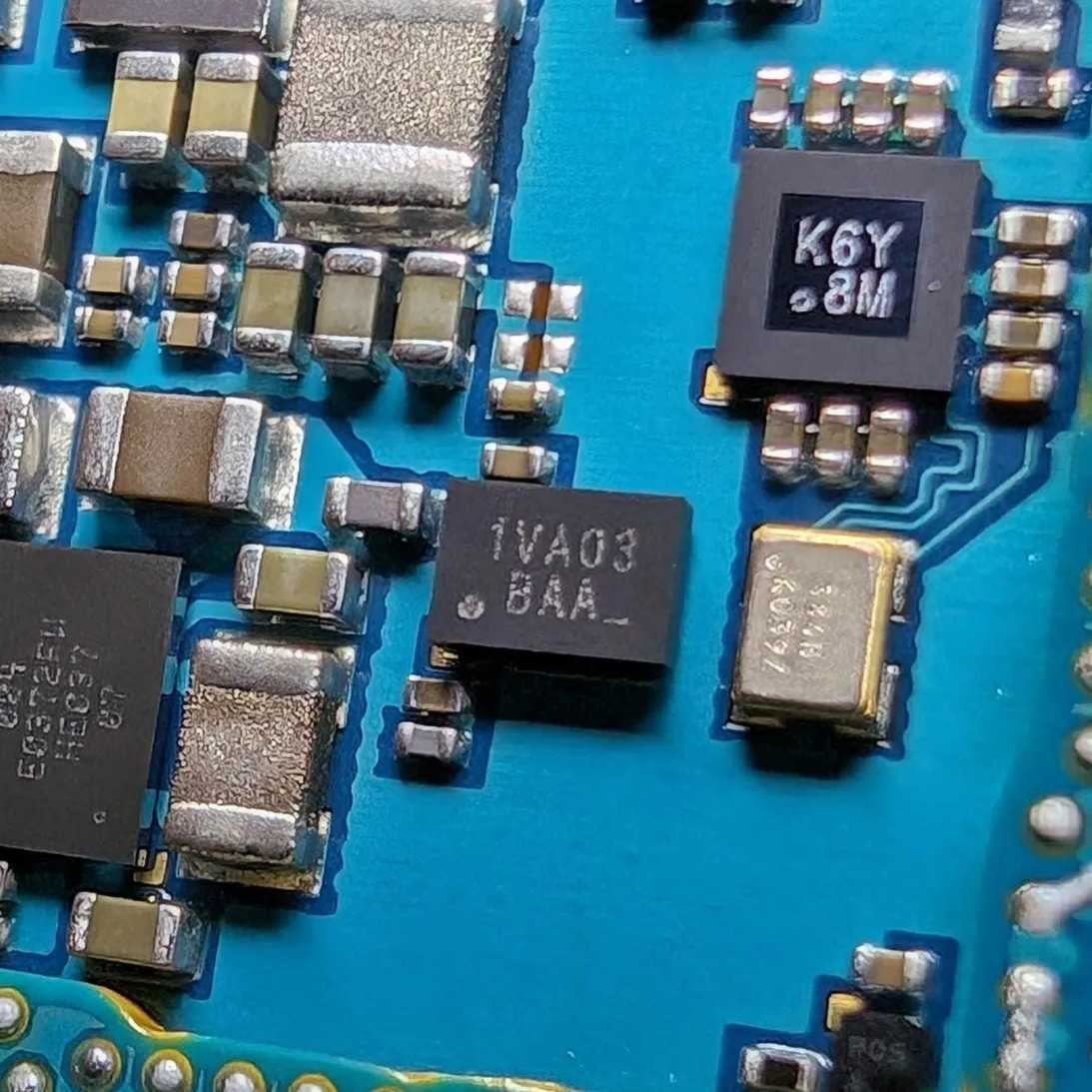
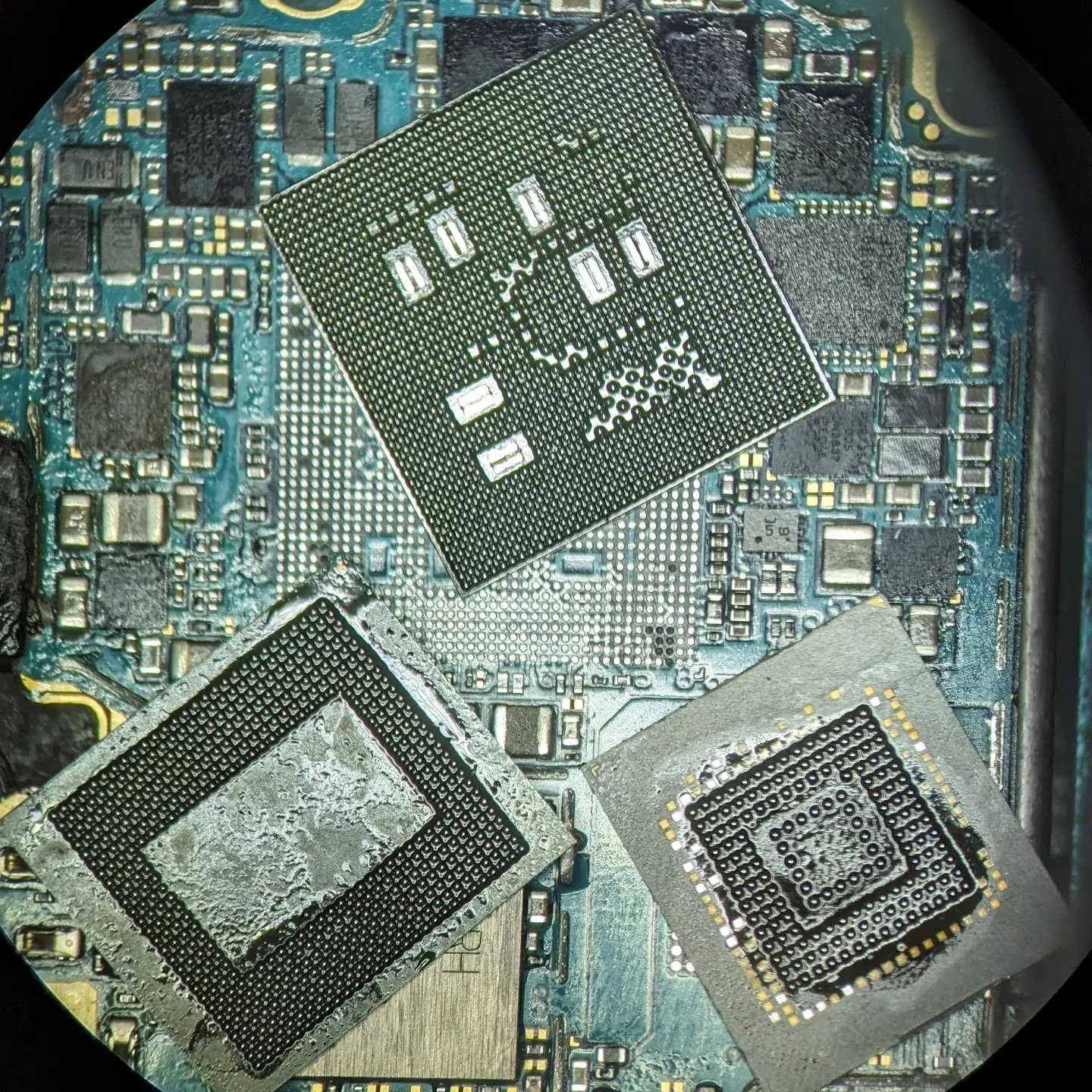
Unless you embark on the intricate journey of swapping the essential chips – the CPU and UFS – to a working motherboard. Now, that's no walk in the park. To complicate matters, the S21 and its newer counterparts demand an additional step. Some elusive tiny IC, rumored to be an eeprom or the eSIM chip, needs to tag along for the ride.
The S21 series, known for its sleek design, presents a unique challenge. To accommodate a large battery for extended smartphone life, designers opted for a stacked motherboard configuration – two layers deep. A space-saving brilliance that, for us microsoldering techs, translates to a more complex repair process.
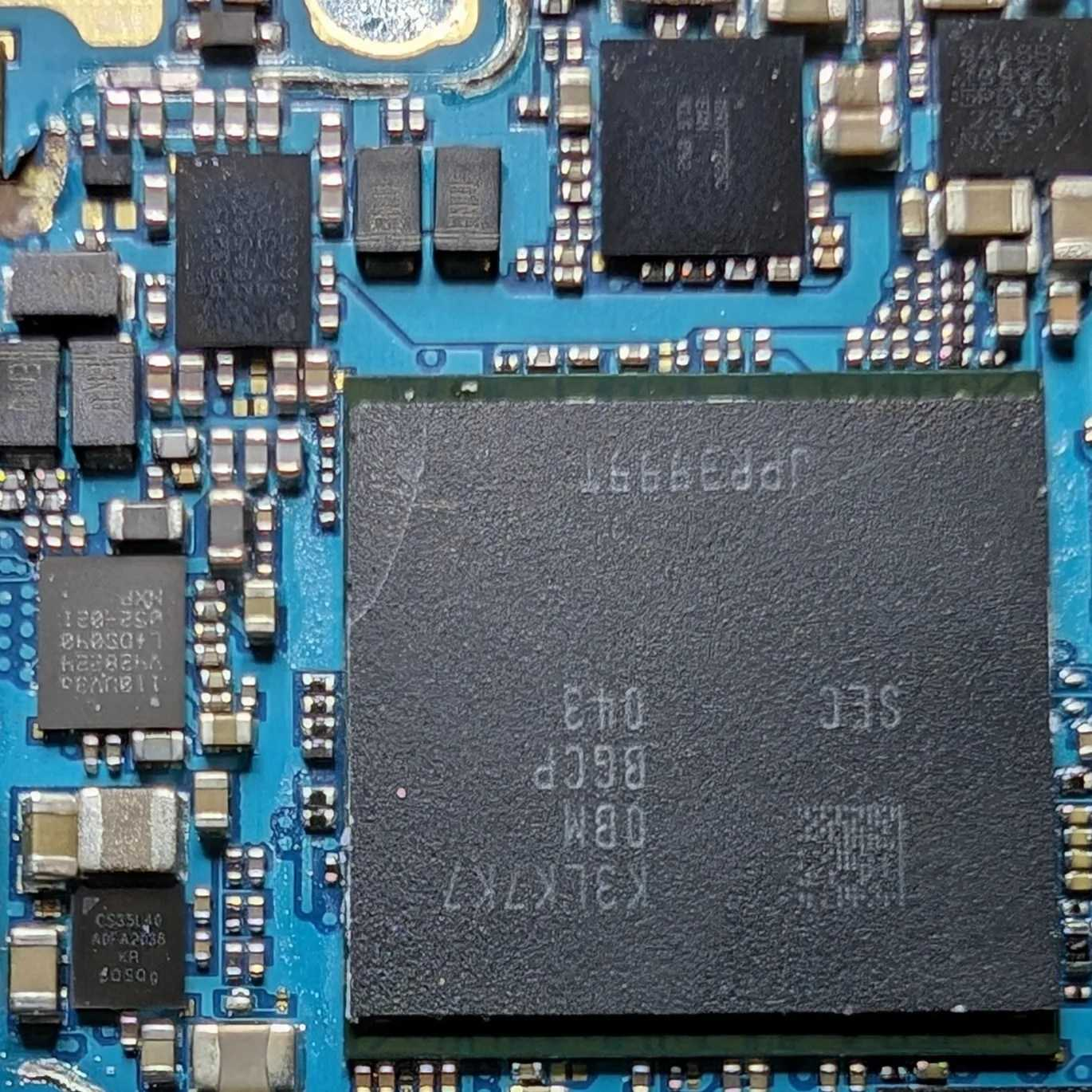
In this particular case, a cracked RAM added a layer of difficulty. Thankfully, the CPU remained unscathed, and the RAM, fortunately, didn't need to be the original for data recovery. After a meticulous dance of swapping the CPU, UFS, installing a new RAM, and delicately splitting the motherboard sandwich, we transplanted the elusive "pin code IC," reballing the sandwich for good measure. The final steps involved booting the phone, unlocking it, and running a Smart Switch Backup to secure every bit of precious data.
Undoubtedly, this level of data recovery is an investment. Still, it's a service we proudly extend to anyone in need of rescuing their valuable data.
If you find yourself in a data recovery dilemma, drop us a message or reach out through our website (link in bio).
For fellow repair shops, we offer discounted B2B pricing to ensure we all stay connected in the world of tech rescues.
If you have a Seek Thermal Cam, you're missing out if you don't have a VCC Seek Stand: https://www.vccboardrepairs.com/buy-seek-stand
Injured Gadgets just got these back in stock, so get them while you can!
It can take us a while to build these out sometimes, so they're sometimes out of stock for a while, but we're working towards always having inventory ready to build more as they sell out.
This stand makes using a thermal cam so easy. So much better than any other thermal solution on the market.
It allows you to get real close up (using my Macro Lens), and easily find where the short is coming from.
Plus it's hard free, so you can have your hands free to try to boot the device from DCPS, while having an image that is in focus & not moving around.
You can even record a video through the app, while you inject voltage into the short, so you can go back & see exactly which component was it that was heating up.
Save yourself lots of time by getting a Seek Cam, Stand & Macro Lens! ...
Anyone who is doing game console repairs, knows how many screws you need to remove to access the motherboard.
Especially the PS5, with the 5,000 screws or so.
If you don't already have an electric screwdriver, GET ONE ASAP.
🌟 Cordless Screwdriver with T9 Bit: https://amzn.to/3E5duCj
🌟Extended T9 Bit: https://amzn.to/3c4YJac
It's rechargeable through micro USB and allows you to easily swap the tips out. You can also fold it to be straight or L shape.
Let me know below if you are already using an electric screwdriver 👇👇
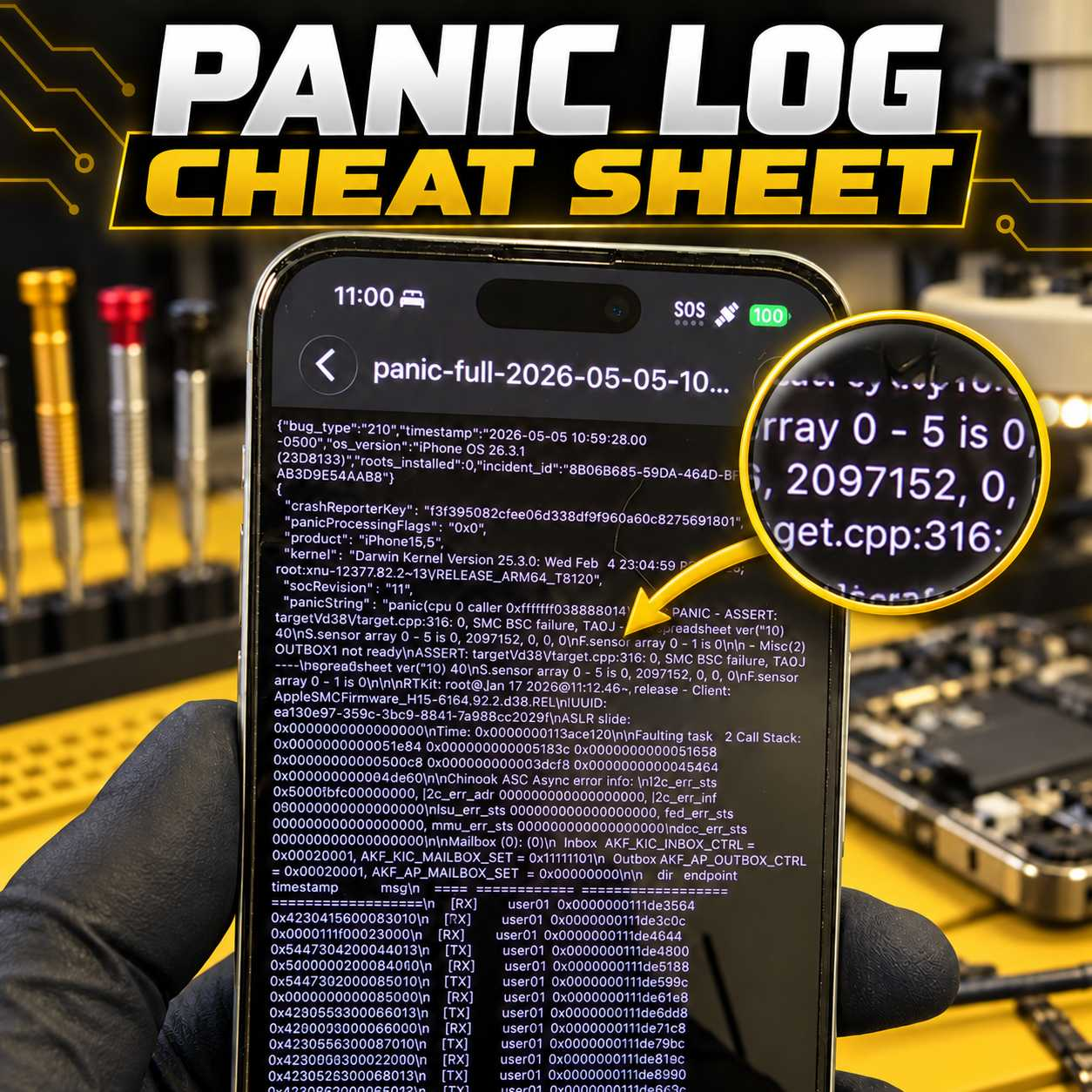
Stop Guessing at iPhone Panic Logs
Panic logs can provide valuable information about why an iPhone is restarting, but identifying the actual cause is not always straightforward.
A panic log may point toward a charging-port assembly, proximity sensor, power circuit, missing sensor, damaged flex cable, or a board-level issue. The difficult part is knowing which component is responsible on each particular iPhone model.
That is why I created the VCC Panic Log Cheat Sheet.
Personally Tested and Verified Solutions
This is not a generic list copied from forums or collected from unverified posts.
The cheat sheet is based on panic logs and solutions I have personally tested and verified while repairing iPhones at VCC Board Repairs. It covers virtually every iPhone model and documents the parts, sensors, flex cables, and circuits commonly associated with specific panic strings and numerical values.
The goal is simple: help repair technicians diagnose restart issues faster and avoid wasting time or money replacing the wrong parts.
...
In case you haven't heard, I will be moving from Las Vegas, NV to Star, ID.
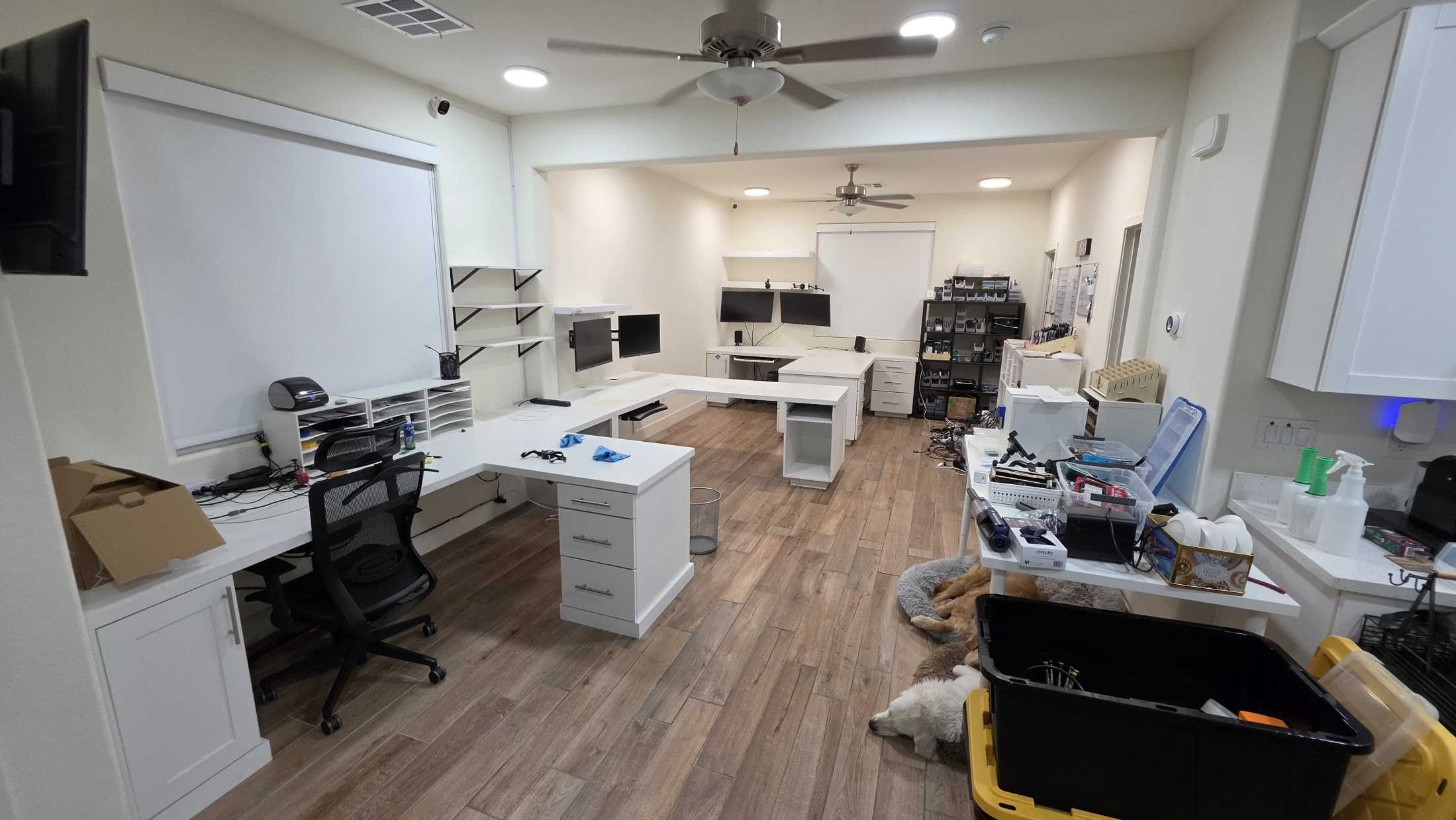
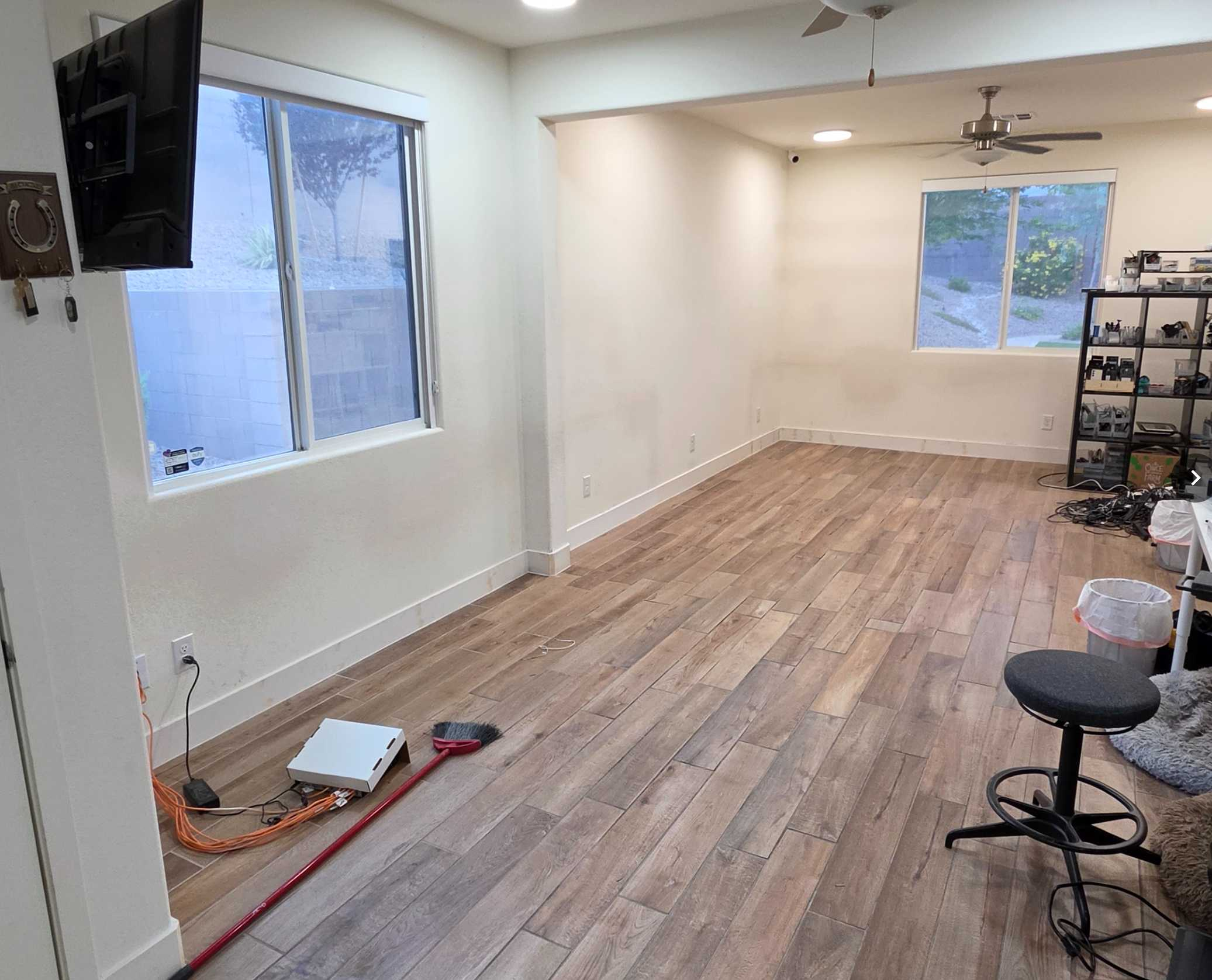
In my Las Vegas office, I had fully custom built workbenches for myself & my employee(s). But now it's time to go & tear everything down.
I'm really sad since these benches felt like the perfect layout! Or maybe I just got used to them.
I've attached some pics of what it looked like before & now that's all gone.
I do have some good news tho.... I recorded a detailed video of my office for youtube! I'll be posting that video soon!
Like this post if you want to see that video!